



22 Jan Navigating the Agentic AI Maze: 5 enterprise challenges to getting value
The Agentic AI Implementation Gap
The gap between a successful demo and a successful deployment has always been technology’s cruelest teacher. It’s one thing to show an AI agent booking an appointment in a conference room; it’s quite another to have that same agent handle millions of patient interactions under HIPAA compliance while maintaining brand consistency and avoiding liability. This gap…call it the implementation gap…is where most agentic AI initiatives currently live and die.
The Problem with Pilots
The demos are undeniably compelling. An AI agent that can reason, plan, and execute multi-step workflows looks like the future. Healthcare systems envision digital front doors that handle appointments and billing autonomously. HR departments imagine workplace agents that onboard employees without human intervention. Banks see customer service agents that complete transactions conversationally across every channel.
But here’s what the demos don’t show: the governance frameworks required to ensure the agent doesn’t violate regulatory requirements, the data access controls needed to operate across fragmented enterprise systems, the observability infrastructure to debug failures in production, the workflow integrations to actually complete tasks rather than just discuss them, and the economic model that proves the whole endeavor generates positive ROI.
These aren’t nice-to-haves. They’re the difference between a pilot and a product.

Enterprise reality has a way of grounding even the most promising pilots
The Five Structural Challenges
The pattern repeats across patient experience, employee experience, and customer experience deployments:
1. Governance & Safety
Autonomous action requires autonomous boundaries. An agent planning its own workflow is useless if it can’t operate within regulatory constraints, brand guidelines, and risk tolerances. Healthcare agents must respect HIPAA. Banking agents must stay within credit decision frameworks. HR agents must follow approval hierarchies. The technical challenge isn’t generating a plan—it’s generating a compliant plan.
2. Data and Access Control
Enterprise data is fragmented by design. Patient records sit in EHRs, employee data in HRIS systems, customer information in CRMs. Each system has its own authentication, authorization, and consent model. An agent that can’t navigate this fragmentation can’t deliver value. Worse, an agent that navigates it incorrectly creates liability.
3. Reliability and Observability
Demos showcase best-case scenarios. Production requires worst-case resilience. What happens when the agent encounters an edge case? How do you debug a conversation that failed three steps into a seven-step workflow? How do you measure containment rates, escalation patterns, and success metrics across millions of interactions? Without observability infrastructure, you’re flying blind.
4. Workflow and Tool Integration
Answering questions is table stakes. Agents must do work—schedule appointments, provision access, complete transactions. That requires deep integration with enterprise workflows: EHR systems, ITSM platforms, banking cores, telephony infrastructure. Pre-built connectors aren’t optional; they’re the product.
5. Economics and Organizational Readiness
The business case must close. That means proving ROI, managing LLM inference costs, and solving the organizational challenge of who builds and maintains these systems. If deployment requires hiring a team of AI specialists and six months of custom development, the unit economics don’t work for most use cases.
The Platform Play
This is where Avaamo’s approach becomes interesting. Rather than selling agentic AI as a capability, they’re selling it as a system; one that explicitly addresses each structural challenge.
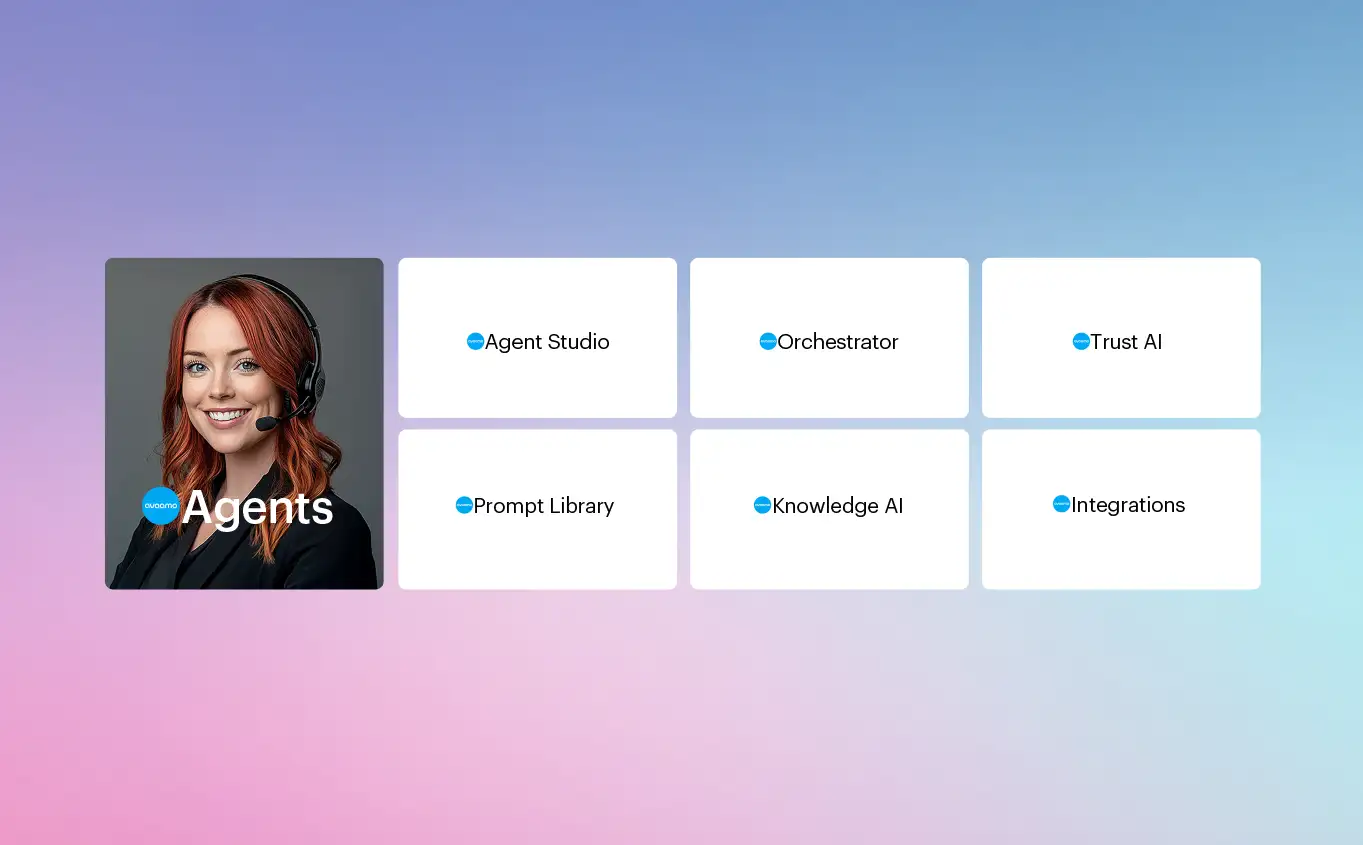
For healthcare deployments, the platform delivers HIPAA-compliant agents with built-in guardrails and audit trails, deep EHR integration with consent management, production analytics across patient journeys, workflow orchestration for appointments and billing, and out-of-the-box skills that demonstrate ROI in six-week deployments.
For employee experience, workplace agents come with enterprise policy enforcement and approval workflows, pre-built connectors to HR and IT systems with role-based access, conversation-level visibility for debugging and tuning, executable integrations for onboarding and troubleshooting, and low-code tools that eliminate the need for large in-house AI teams.
For customer experience, industry-specific agents embed policy logic and escalation rules, multi-tenant security with data segregation, ROI dashboards linking performance to containment and cost-to-serve metrics, omnichannel capabilities across web, mobile, and voice, and production-grade testing infrastructure.
Notice the pattern: every feature maps to one of the five structural challenges. This isn’t accidental. It reflects a theory about what agentic AI actually requires at scale.
The Digital Employee Framework
The “digital employee” analogy is apt. You wouldn’t hire someone without a handbook (governance), a badge (access control), performance reviews (observability), the tools to do their job (integration), and a salary structure (economics). The same constraints apply to AI agents.
But here’s what makes this interesting from a strategic perspective: these constraints create natural moats. Building governance frameworks, securing data access across enterprise systems, instrumenting observability infrastructure, developing workflow integrations, and proving ROI aren’t one-time engineering efforts. They’re ongoing platforms that accumulate value with each deployment.
A healthcare system that integrates deeply with an agentic AI platform faces switching costs that go far beyond the technology itself. The compliance frameworks, the workflow automations, the proven ROI; these become organizational infrastructure. The same dynamic applies in employee experience and customer experience.
What This Means
The current moment in agentic AI resembles the early cloud era: lots of custom deployments, bespoke solutions, and hand-rolled infrastructure. What’s needed is platformization; standardized solutions to recurring problems.
The companies that solve the implementation gap won’t necessarily be the ones with the most sophisticated models. They’ll be the ones that make deployment predictable, safe, and economically viable. That requires treating agentic AI not as a research problem but as a systems problem.
The demos will keep getting better. But production is where the value lives, and production requires solving all five challenges simultaneously. There’s no partial credit for getting four out of five right.
This is the real test of agentic AI: not whether it can impress in a conference room, but whether it can operate reliably, compliantly, and economically in the messy reality of enterprise deployment. The implementation gap remains wide. The companies that close it will capture the value.
